
Can You Breastfeed After Breast Implant Surgery? What Every Woman Should Know
Table of Contents
A woman plays many important roles throughout her life. She may be a daughter, a wife, a professional, a caregiver, and one day, a mother. While many women dream of motherhood, they also want to feel confident about their appearance. It is completely normal to want both.
Many women feel unhappy with the size or shape of their breasts and start thinking about Breast Implant Surgery. Then a question pops into their mind. “What if I can’t breastfeed my baby later?” For many women, that one question is enough to put their plans on hold.
“Will I still be able to breastfeed my baby in the future?”
This is one of the most common concerns I hear from women visiting my clinic. Some decide to postpone surgery because they worry it may reduce milk production or make breastfeeding difficult after pregnancy.
Others are confused after reading conflicting information online. Unfortunately, many of these answers are based on personal experiences rather than medical evidence.
Before we get into the details, let me reassure you about one thing. This is not a simple yes-or-no question. Some women breastfeed without any difficulty after Breast Implant Surgery, while others may need additional support. Understanding why that difference exists is much more important than believing myths you may have read online.
As a board-certified Plastic Surgeon in Mumbai, I believe you deserve clear, honest information before making such an important decision.
In this article, I’ll explain whether Breast Implant Surgery affects breastfeeding, what actually influences milk production, why implant placement and surgical technique matter, and what you must discuss with your surgeon if you plan to have children in the future.
Can You Breastfeed After Breast Implant Surgery?
The short answer is yes, most women can breastfeed after Breast Implant Surgery. However, no doctor can honestly guarantee it for every woman.
At this point, you might be thinking, “If the implant isn’t the problem, then what actually affects breastfeeding?” That’s the right question to ask, because the answer lies more in the surgical technique than in the implant itself.
Whether you can successfully breastfeed depends on several factors, including:
- Your natural breast anatomy
- The amount of glandular tissue you have
- Whether important milk ducts and nerves are preserved during surgery
- Where the implant is placed
- The incision used during surgery
- Individual differences in milk production
In other words, the implant itself is usually not the biggest factor. How the surgery is planned and performed often matters much more.
In fact, many women who haven’t undergone any breast implants also face breastfeeding difficulties. It can be due to hormonal changes, insufficient glandular tissue, poor infant latch, or other medical reasons. So if breastfeeding becomes challenging after delivery, it does not automatically mean the implants are responsible.
Research has shown that many women with breast implants successfully breastfeed, although some may require additional breastfeeding support or temporary supplementation if milk supply is lower than expected.
From my experience, discussing your future pregnancy plans before surgery allows your plastic surgeon to choose techniques that may better preserve your breastfeeding potential while still achieving natural-looking cosmetic results.
To understand this, it helps to know how breastfeeding works.
Think of it like a natural pathway. The glands produce milk, tiny ducts carry it to the nipple, and nerves send signals to the brain that tell your body when it’s time to produce and release milk.
During Breast Implant Surgery, the implant is placed either under the breast tissue or under the chest muscle. The implant itself does not produce or block milk. However, if important milk ducts or nerves are disturbed during surgery, some women may experience reduced milk production or difficulty breastfeeding.
This is why careful surgical planning is so important.
One thing I always discuss with women before surgery is whether they plan to have children in the future. It may seem like a small detail during the consultation, but it often influences how I plan the surgery.
Studies suggest that many women with breast implants can breastfeed successfully.
However, some may produce less milk than expected and may need additional breastfeeding support or supplement feeding depending on their individual situation.
Does Implant Placement Matter?
Yes, implant placement can influence future breastfeeding, although it is only one of several factors.
Generally, implants can be placed:
- Under the chest muscle (submuscular placement)
- Above the muscle but beneath the breast tissue (subglandular placement)
For women who hope to breastfeed in the future, placing the implant beneath the chest muscle is often preferred because it usually involves less interference with the milk-producing glandular tissue. It may also help preserve normal breast function while providing good cosmetic results.
That does not mean every woman should have under-the-muscle implants. The ideal approach depends on your body shape, existing breast tissue, lifestyle, and cosmetic goals.
Many patients are surprised when I tell them that choosing the right implant placement isn’t only about achieving a natural-looking result. It is also about respecting the normal breast anatomy as much as possible.
This is why there is no single technique that suits everyone.
Related: Breast Implant vs. Breast Lift: Which Option is Right for You?
Does the Incision Used During Surgery Make a Difference?
Another important factor is where the incision is made.
Common incision options include:
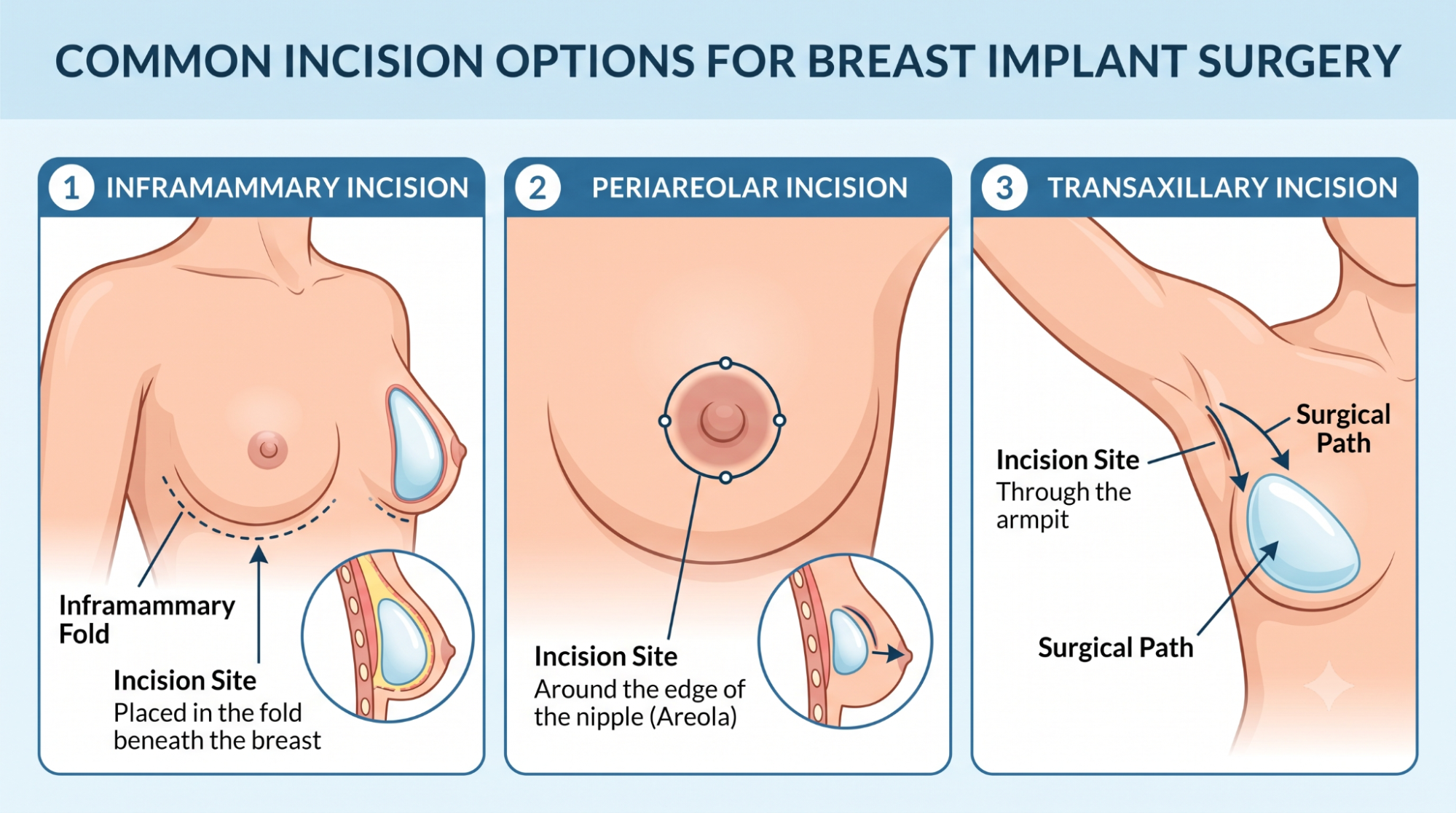
- Inframammary incision, placed in the fold beneath the breast
- Periareolar incision, around the edge of the nipple
- Transaxillary incision, through the armpit
The incision location matters because some approaches are closer to the milk ducts and nerves involved in breastfeeding. Usually, I prefer an inframammary incision while doing breast implant surgery.
For women planning future pregnancies, many plastic surgeons prefer the inframammary approach whenever appropriate, as it generally allows excellent access while reducing the likelihood of disturbing important breast structures. However, the best incision depends on each patient’s anatomy and surgical goals.
Are Silicone Breast Implants Safe While Breastfeeding?
This is another concern I hear regularly.
Many women worry that silicone from the implant could leak into breast milk and harm their baby. I completely understand why mothers ask this question. After all, when it comes to your baby’s health, even a small doubt can feel like a big concern. Fortunately, the available evidence has been reassuring.
Current scientific evidence is reassuring. Studies have not shown that silicone breast implants make breastfeeding unsafe for babies. The amount of silicone found in breast milk from mothers with implants is not considered harmful, and professional medical organisations generally support breastfeeding after breast augmentation.
If your implants remain intact and healthy, breastfeeding is generally considered safe.
Should You Wait Until After Pregnancy to Have Breast Augmentation?
There is no universal right answer.
If someone asks me whether they should postpone surgery simply because they may become pregnant someday, my answer is always the same: let’s first understand your timeline and your priorities. Every woman’s situation is different.
It depends on your priorities and future family plans.
If you are planning pregnancy within the next year or two, waiting until after childbirth and breastfeeding may sometimes be the better option. Pregnancy naturally changes breast size, skin elasticity, and breast shape, which can alter your cosmetic results.
On the other hand, if pregnancy is several years away, there is usually no medical reason to postpone Breast Augmentation solely because you may wish to breastfeed in the future.
This decision should always be made after discussing your future family plans with your plastic surgeon before surgery. That conversation helps determine the surgical approach that best balances cosmetic results with preserving breastfeeding potential.
Related: Breast Implant Surgery: Everything You Need to Know
Will Pregnancy or Breastfeeding Damage My Implants?
No.
Pregnancy and breastfeeding do not damage breast implants or cause them to rupture.
However, pregnancy brings hormonal changes that naturally enlarge the breasts. After breastfeeding, the breasts may lose volume or develop some sagging as the breast tissue changes. These changes occur in women with or without breast implants.
Some women remain happy with their appearance, while others later choose a breast lift or implant revision to restore their desired breast shape.
Tips to Improve Your Chances of Successful Breastfeeding
While no surgery can guarantee future breastfeeding success, a few simple steps may improve your chances.
- Tell your plastic surgeon if you plan to have children in the future.
- Discuss implant placement and incision options before surgery.
- Follow all post-operative instructions carefully.
- During pregnancy, inform your obstetrician that you have breast implants.
- Seek help from a lactation consultant soon after delivery if breastfeeding becomes challenging.
- Monitor your baby’s weight gain and feeding pattern instead of assuming implants are the cause of any difficulty.
Many breastfeeding challenges have nothing to do with breast implants and can often be managed with the right support. Don’t assume your surgeon already knows your future plans. Mentioning this during the consultation helps us choose an approach that fits both your cosmetic goals and your long-term plans.
When Should You Speak to Your Doctor?
Consult your doctor if you notice:
- Very little or no milk production despite frequent breastfeeding.
- Persistent breast pain, redness, swelling, or fever after delivery.
- Discharge from your previous surgical scar.
- Your baby is not gaining weight or appears hungry even after regular feeding.
Early evaluation helps identify the actual cause and allows appropriate treatment before breastfeeding problems become more difficult to manage.
Frequently Asked Questions
Yes. Most women can breastfeed after Breast Implant Surgery. Success depends on factors such as surgical technique, preservation of milk ducts and nerves, breast anatomy, and individual milk production.
It can in some women, but not always. Milk supply depends on several factors, including how the surgery was performed and your natural breast tissue. Many women produce enough milk, while others may need additional breastfeeding support.
No. Implant settling, often called “dropping and fluffing,” occurs naturally as healing progresses. Going braless does not significantly speed up this process. Always follow your surgeon’s advice regarding post-surgical bras.
Most implants continue to look natural after five years if there are no complications. However, pregnancy, breastfeeding, ageing, and weight changes can alter the appearance of the breasts over time.
Both options are possible. If pregnancy is planned soon, waiting until after breastfeeding may help preserve your cosmetic results. If pregnancy is years away, surgery before pregnancy can also be a reasonable option after discussing your future plans with your plastic surgeon.
Final Thoughts
Choosing Breast Implant Surgery does not automatically mean you will lose the ability to breastfeed. For many women, breastfeeding after breast augmentation is entirely possible.
The key is understanding that breastfeeding success depends on several factors, including your natural breast anatomy, the surgical technique used, implant placement, preservation of important nerves and milk ducts, and your body’s individual response after pregnancy.
As I always tell my patients, the best time to discuss future pregnancy and breastfeeding is before surgery, not after. A detailed consultation allows your surgeon to understand your long-term goals and recommend the most appropriate approach for you.
If there is one message I hope you take away from this article, it is this: don’t let fear or internet myths make this decision for you. Have an open discussion with your surgeon so you understand both the benefits and the limitations before moving ahead.
One Response